
Jim Beam promueve el consumo responsable. El alcohol debe disfrutarse con moderacion. Al ingresar a este sitio aceptas nuestros Terminos y Condiciones, Aviso de Privacidad y Política de Cookies.
Debes ser mayor de edad para continuar.
Diferencia entre el
bourbon y el whisky

TODO BOURBON ES WHISKEY, PERO NO TODO WHISKEY ES BOURBON
Hay muchos tipos de whiskey (o “whisky”, según el país): Scotch whisky, Irish whiskey, Tennessee whiskey, rye whiskey, bourbon whiskey y, por supuesto, Kentucky Straight Bourbon Whiskey.
En Jim Beam somos especialmente fans de estos dos últimos, y queremos contarte qué hace que el bourbon sea único frente al resto.

TODO EMPIEZA CON REGLAS MUY CLARAS. EL GOBIERNO MARCA EL ESTÁNDAR
Para llamarse bourbon, un whiskey debe cumplir todos estos requisitos.
Jim Beam no solo los cumple: es el bourbon #1 del mundo.
- Producido en EE. UU.
- Al menos 51% maíz en la mezcla.
- Destilado a máximo 160 proof.
- Envejecido en barricas nuevas de roble americano tostadas.
- Almacenado a máximo 125 proof.
- Mínimo dos años de añejamiento.
- Sin aditivos.
This Is What Makes It Bourbon
Why corn matters
When European settlers arrived in America, they brought their grains with them. Barley had its place. Rye had its place. But in Kentucky, in the late 1700s, corn grew abundantly and reliably. For early Kentucky distillers, including the Beams, corn was not just available. It made something different.
The flavor difference: Bourbon vs Whiskey
One of the clearest taste differences between bourbon and whiskey from other traditions comes from the barrel. Bourbon must age in virgin American oak barrels, where the wood helps shape the color, smoothness and flavor that make bourbon so easy to enjoy.
It helps give bourbon its deeper color and its smooth, mellow flavor, with notes of vanilla, caramel and oak. That flavor is not added. It comes from the grain, the wood, and the time they spend together.
The proof rules help protect that character, too. Bourbon is distilled at no more than 160 proof (80% ABV), entered into the barrel at no more than 125 proof (62.5% ABV), and bottled at no less than 80 proof (40% ABV). By the time it reaches the bottle, only water can be added to bring it to proof. Nothing else.
And when we’re done with those barrels, other whiskeys, wines and beers have been known to use them, hoping to pick up some of that bourbon character left in the wood.
We take that as a compliment.
Four Years in Oak. No Additives.
The law says two years for Straight Bourbon. We’ve always treated that as a starting point, not a finish line. Jim Beam Kentucky Straight Bourbon Whiskey is aged for a minimum of four years because those extra seasons matter.
Kentucky’s climate does a lot of work. Warm summers push the bourbon into the wood. Cooler winters draw it back out. Season after season, that movement helps build color, smoothness and flavor. It is not about making bourbon sound more complicated than it is. It is about letting oak and time do what they do best.
And when the bourbon comes out of the barrel, nothing goes in except water to bring it to proof. No added flavoring. No added coloring. No neutral spirits.
Four years in fresh American oak gives Jim Beam its character. We’ve never felt the need to dress it up.


Common bourbon myths worth busting
Bourbon has rules. A lot of them. And honestly, we don’t mind — we’ve been following them longer than most people have been asking about them. But over the years, a few myths have stuck around that blur what bourbon actually is.
So let’s clear them up.
Kentucky has a monopoly on Bourbon
You’ve probably heard that bourbon must come from Kentucky. It sounds true, but it isn’t. Bourbon can legally be made anywhere in the United States of America.
That said, Kentucky has earned its place in bourbon history. The climate, the limestone-filtered water and the generations of craft passed down there all help shape the way bourbon matures and tastes. Those things are not legal requirements, but they do make a difference.
That is why Jim Beam makes its bourbon in Clermont, Kentucky. Not because Kentucky is the only place bourbon can be made, but because it is the place we know best. The map alone does not make a whiskey bourbon. What happens in the mash, the barrel and the bottle does.
Every Bourbon Spends Two Years in the Barrel
The law does not demand two years for every bourbon. That two-year mark applies to Straight Bourbon.
But time matters. It deepens the color, rounds out the flavor and brings those notes of vanilla, caramel and oak forward from the charred barrel. The law sets one standard. At Jim Beam, we give our bourbon more time.
Jim Beam Kentucky Straight Bourbon Whiskey is aged for a minimum of four years in newly charred American oak barrels. We do it because those extra seasons matter, and because the barrel has always been one of our best partners.
All Bourbon Goes Through the Same Filter
It doesn’t. Bourbon law doesn’t require one specific filtration method, so each maker has to decide how to handle that final step before bottling.
Some producers filter more heavily. Others keep it lighter. At Jim Beam, the goal is simple: keep the bourbon clear and consistent while protecting the flavor the barrel worked so hard to build.
That final touch matters. By the time bourbon reaches the bottle, the corn, oak, char and time have already done the heavy lifting. Our job is to protect the character the barrel worked so hard to build.


Ese porcentaje es lo que le da al bourbon su dulzor característico.


Nuestro estilo de añejamiento en barrica aporta un color más profundo y un sabor suave, equilibrado y lleno de matices: notas de vainilla, caramelo y madera tostada.
Cuando terminamos con esas barricas, otros whiskeys, vinos e incluso cervezas las buscan para “aprovechar” un poco de esa delicia que queda atrapada en la madera. Así es como nace el carácter único de nuestro bourbon.
La ley en Estados Unidos exige que un bourbon se añeje por lo menos dos años. Pero factores como los cambios extremos de temperatura entre estaciones influyen muchísimo en cómo evoluciona un whiskey. En Kentucky, un whiskey madura mucho más rápido que en lugares como Escocia, lo que intensifica su carácter.
En Jim Beam, dejamos reposar nuestro bourbon al menos cuatro años para lograr un sabor más redondo, maduro y extra suave.
La espera, créenos, siempre vale la pena.


Muchos productores de whiskey suelen agregar saborizantes o color caramelo a sus líquidos. Pero aunque cumplan con el resto de los requisitos, no pueden llamar “bourbon” a su whiskey.
El bourbon solo permite una cosa añadida: agua, y únicamente para ajustar su graduación.
NUESTRA FAMILIA DE BOURBON WHISKEY
Descubre qué hace especial a cada uno de nuestros bourbon whiskey y conoce la historia detrás de ellos.
Visítanos
Recorre la casa del bourbon whiskey y el hogar de Jim Beam. Desde los tours por el rackhouse hasta cócteles inspirados en Kentucky, hay mucho por descubrir en Clermont.

Frequently Asked Questions About Bourbon vs Whiskey
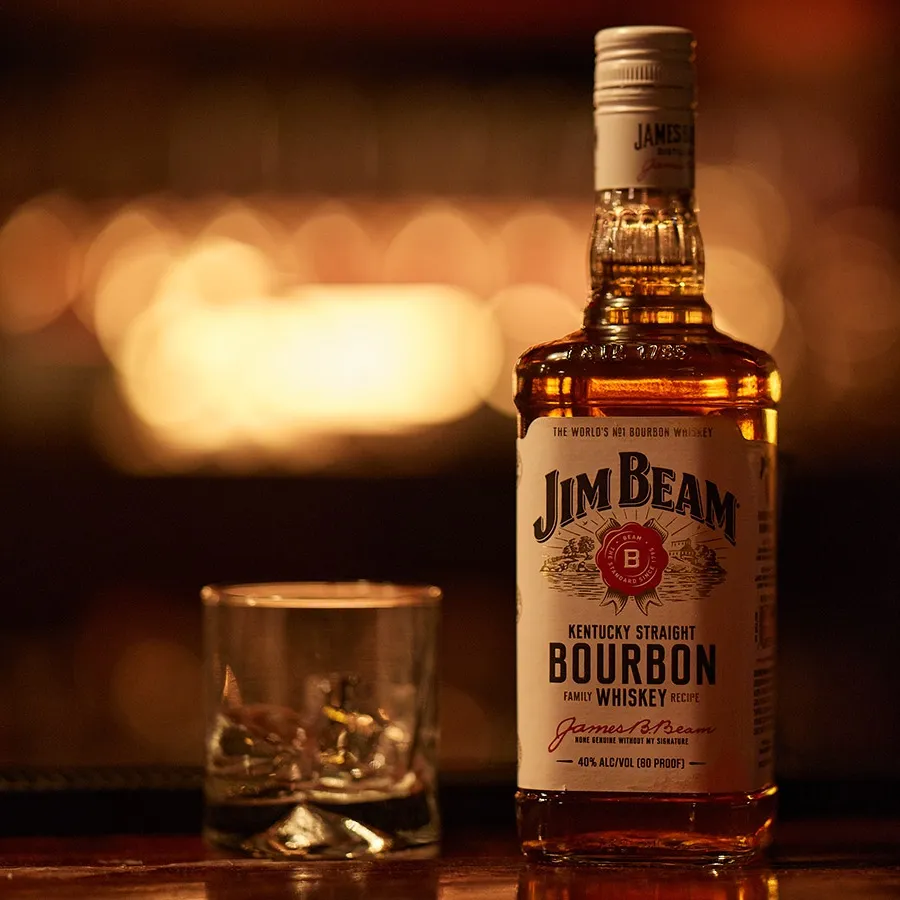
Jim Beam is a Kentucky Straight Bourbon whiskey, meaning it meets all legal requirements for bourbon and is distilled and aged in Kentucky.
Jim Beam is aged for four years in American white oak, which is twice what the law requires for Straight Bourbon.
Jim Beam has a medium-bodied flavor with mellow notes of caramel and vanilla, balanced by oak, grain and a touch of spice. Smooth, approachable and easy to enjoy neat, on the rocks or in a cocktail.
Jim Beam is made with quality grains and pure limestone-filtered water, drawing on over 225 years of family tradition passed down through seven generations of the Beam family.
Beyond the original, Jim Beam offers a range of expressions including Jim Beam Black, Jim Beam Rye and a variety of bourbon flavors, along with other flavored and premium selections
Jim Beam Bourbon can be enjoyed on its own or mixed into cocktails such as a Sparkling Lemonade, Whiskey Sour, or an Old Fashioned.